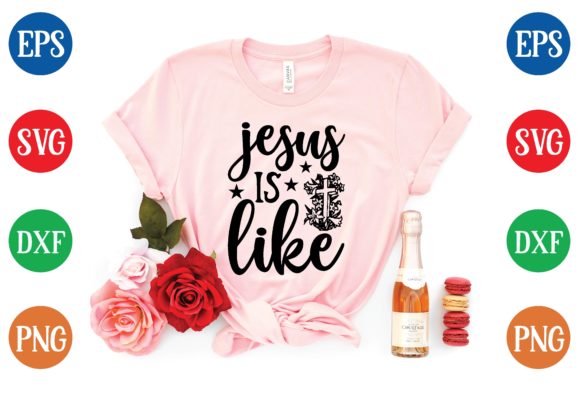
Jesus Is Like SVG: Creative Visual Faith
Designers, content creators, and small business owners constantly look for versatile visual tools that communicate complex ideas with clarity. Jesus is Like SVG offers exactly that—a scalable vector format for illustrating parables, attributes, and analogies of Jesus in a way that works across digital and print media. Unlike static image formats, SVG files remain crisp at any size, making them ideal for everything from social media graphics to large-format banners.
This approach blends theological reflection with practical design. Instead of using generic clip art or overly literal depictions, you can represent concepts through clean lines, icons, and symbolic motifs. The result is a visual language that feels modern, respectful, and adaptable for audiences ranging from educators to entrepreneurs.
What Makes Jesus Is Like SVG Distinct
At its core, Jesus is Like SVG focuses on parables and metaphors—the Good Shepherd, the vine and branches, the light of the world, the cornerstone. Each analogy translates into graphic elements that work together in a single cohesive file. Layers remain editable, colors can be swapped, and individual components can be extracted for reuse in other projects.
For designers, this means you can take one core concept and adapt it across multiple formats without recreating the wheel. A youth group leader might use the full composition on a flyer, then pull out a single icon for a slideshow. A blogger could embed the full graphic in a post, then export a cropped version for a Pinterest pin. The flexibility comes from the file format itself—scalable, editable, and lightweight.
Another key advantage is consistency. When your visuals share the same stylistic DNA, your brand or message becomes instantly recognizable. Whether you're designing for a nonprofit, a creative ministry, or your own side project, keeping a unified look builds trust and professionalism.
Creative Possibilities with Parable-Based Vectors
Thinking about Jesus is Like SVG in terms of storytelling opens up several practical directions. Here are some approaches worth exploring:
- Icon sets for teaching resources: Create a series of simple icons representing different parables—a mustard seed, a lost coin, a prodigal son. Teachers can use these in handouts, worksheets, or classroom displays.
- Social media templates: Build quote cards around a central analogy. For example, pair the phrase “I am the light of the world” with a clean lantern or candle vector, using the SVG's layered structure to adjust background colors for different platforms.
- Branding elements for community projects: A food pantry or homeless shelter could adopt the feeding of the five thousand as a motif. The scalability of SVG means the same visual works on a website header, a printed poster, and a small donation card.
- Email newsletter accents: Use small SVG elements as dividers or spot illustrations. They load fast, look sharp on retina screens, and reinforce your theme without overwhelming text.
Each of these ideas starts with the same core asset but adapts for a different audience or platform. The key is thinking modularly—design once, deploy in multiple contexts.
Practical Applications Across Audiences
Different users will approach Jesus is Like SVG with different goals. Here is how various groups can adapt the concept:
For Educators and Homeschool Parents
Visual aids make abstract concepts tangible. An SVG illustrating the parable of the sower, for instance, can be printed as a poster or displayed on a tablet. You can color-code different soil types or add labels without losing image quality. Because SVG files are vector-based, you can enlarge them for a classroom wall or shrink them for a memory card game. The same file can be edited year after year, swapping colors to match a new curriculum theme.
For Bloggers and Content Creators
Blog posts about faith, creativity, or personal growth often need visuals that complement the text without distracting from it. Using Jesus is Like SVG elements as featured images or inline graphics adds professional polish. Since SVGs are coded in XML, you can even add alt text directly to the file, improving accessibility and SEO. A blogger covering the theme of “Jesus as the vine” could embed an SVG that shows branches growing from a central trunk, with each branch linked to a different section of the article.
For Small Business Owners and Entrepreneurs
If you run a faith-based product line or service, cohesive branding matters. An SVG motif based on a specific analogy—like the cornerstone—can become a logo element, a watermark, or a package pattern. The vector format ensures it prints cleanly on mugs, T-shirts, or stationery. You can also animate the SVG for a website hero section without relying on heavy video files, which keeps your site fast and mobile-friendly.
For Freelance Designers
Offering clients unique, meaningful visuals sets you apart. When a church or nonprofit needs materials for a sermon series, you can build a complete visual kit around a single “Jesus is Like” theme. The SVG format lets you deliver files that are easily customizable by the client's team later. They can change colors for different seasons, add text, or resize for various placements. This reduces revision requests and builds long-term client relationships.
Variations and Style Approaches
The same analogy can be expressed in multiple visual styles. Choosing the right approach depends on your audience and the emotional tone you want to set.
- Minimalist line art: Works well for modern, clean designs. Thin, consistent strokes give a professional and approachable feel, suitable for mobile apps or slideshows. Color can be added sparingly to highlight key elements.
- Flat illustration with bold colors: Ideal for children's materials or social media where you need to grab attention quickly. Bright, filled shapes make the message instantly readable.
- Hand-drawn or organic style: Gives a warm, personal feel. This works for devotional journals, greeting cards, or small-group study guides. The slight irregularity of hand-drawn lines feels authentic and inviting.
- Iconographic or symbolic approach: Uses universal symbols—a cross, a fish, a crown of thorns—combined with more literal elements. This style is versatile and cross-denominational, making it suitable for broader audiences.
Each style can be executed in SVG without losing editability. The layers stay separate, text remains editable, and colors can be swapped in seconds. This keeps your workflow efficient without sacrificing quality.
Keeping Results Clear and Audience-Friendly
Regardless of the style you choose, clarity should guide every decision. When working with Jesus is Like SVG, consider these principles:
- Limit elements per design. Too many symbols competing for attention dilute the message. Decide on one central analogy and support it with only two or three secondary elements.
- Use consistent line weights and spacing. This creates visual harmony, especially when combining multiple icons in a single composition. Inconsistencies look unprofessional, even in casual styles.
- Choose colors with purpose. Color carries emotional weight. Blue might suggest calm and trust, while gold can imply value and divinity. Test your palette in grayscale to ensure contrast remains strong.
- Design for the smallest screen. SVGs scale up beautifully, but you should still check that details remain visible on mobile. Thin lines may blur at small sizes, so adjust stroke widths accordingly.
- Think about accessibility. Use descriptive titles and desc tags within the SVG code. Screen readers can then interpret the visual, making your content more inclusive.
These guidelines apply whether you are creating a single graphic or a whole series. Consistency across multiple files builds a recognizable visual language that your audience will come to trust and appreciate.
Practical Recommendations for Getting Started
If you are ready to use Jesus is Like SVG in your own work, start with a single analogy that resonates with your current project. Open the file in a vector editor like Illustrator, Inkscape, or Figma. Explore the layers to understand how each element is structured. Then experiment with color, scale, and composition before finalizing.
For those selling products or services, consider creating a small bundle of related SVG files—perhaps a series on the “I Am” statements or the parable series in Matthew 13. These bundles work well as digital downloads on platforms like Etsy or Gumroad, or as complementary resources for a blog series or online course. Because SVGs are lightweight and universally supported, they make excellent digital products that customers can use immediately.
Collaboration is another avenue worth exploring. If you are a designer, partner with a writer or theologian to create themed packs. The writer provides meaningful descriptions or devotions, while you handle the visuals. This cross-disciplinary approach adds depth to the final product and reaches a wider audience.
Remember that Jesus is Like SVG is not just a file format—it is a way of thinking about visual communication. Every parabola, metaphor, and analogy offers a chance to build something that informs, inspires, and remains adaptable for years to come.