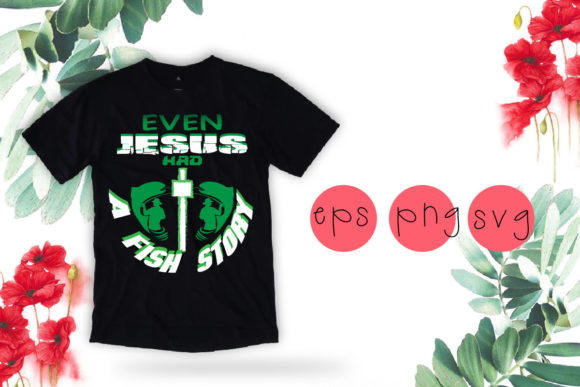
Even Jesus Had a Fishing Story: A Font That Tells
Some fonts whisper. Others announce. Then there are those that sit you down and tell you something worth hearing. Even Jesus Had a Fishing Story belongs to that third category. It is a handwritten typeface that carries the warmth of a well-worn journal, the texture of aged paper, and the kind of imperfect charm that instantly feels human. In a design landscape flooded with sterile, geometric sans serifs and overly polished scripts, this font stands out because it remembers what it means to be personal.
The name alone signals intent. This is not a font designed for corporate memos or clinical interfaces. It is built for storytelling, for authenticity, for projects that need to feel grounded and real. Every character carries a slight irregularity—the baseline dips and rises like a hand writing without a ruler, and the stroke widths vary naturally, as if drawn with a fountain pen that catches on rough paper. There is a deliberate looseness to the letterforms, a quality that evokes handwritten notes passed between friends, not typeset pages produced by machine. That tension between control and spontaneity is exactly what gives Even Jesus Had a Fishing Story its personality: it feels simultaneously intentional and effortless.
Visually, the font lives in the space between a refined script and a casual handwritten style. It is not a display font that demands attention through size or ornamentation. Instead, it earns attention through texture and rhythm. The ascenders and descenders are generous, giving the text an airy, spacious feel. The lowercase letters lean slightly forward, as if the writer was in a hurry to get the story down. That forward momentum creates a natural reading flow, making the typeface surprisingly readable even at smaller sizes—something not all handwritten fonts can claim.
Where Even Jesus Had a Fishing Story Belongs
This font is not a workhorse for body copy in a 500-page novel. But it is an exceptional choice for projects where voice matters more than volume. Here is where it shines:
- Editorial and publishing design. Subtitles, pull quotes, chapter headings, and short essay headers all benefit from the font's narrative quality. It works beautifully in literary magazines, personal essay collections, and any publication where the text needs to feel intimate rather than institutional.
- Brand identity for small businesses and creatives. Coffee shops, artisan bakeries, letterpress studios, independent bookstores, and handcraft goods brands can use Even Jesus Had a Fishing Story to communicate warmth and authenticity. It functions well as a primary wordmark or as an accent in a broader brand system.
- Packaging design. On product labels for small-batch goods, the font adds a handmade feel that many premium artisanal brands chase. Tea tins, honey jars, candle boxes, and stationery sets all look more personal with this typeface in the mix.
- Social media graphics and web design. Used sparingly—say, for headlines, quote cards, or banner text—it breaks through the noise of overly polished digital content. It reads as genuine, which is increasingly rare online.
- Personal projects and invitations. Wedding suites, save-the-dates, greeting cards, and family newsletters benefit from a font that feels like it came from a person, not a foundry. Even Jesus Had a Fishing Story makes every message feel handwritten, even when it is printed by the hundreds.
- Logo design and brand marks. As a logotype for a personal brand, a creative consultancy, or a lifestyle business, the font suggests approachability and craftsmanship. It pairs especially well with a clean sans serif for secondary text, creating a contrast between human warmth and modern clarity.
How a Handwritten Typeface Shapes Perception
Typography is never neutral. Every typeface carries associative weight, and Even Jesus Had a Fishing Story signals something specific: this was made by hands, not machines. In an era where AI-generated content and templated design dominate, that human signal is valuable. Audiences are increasingly cynical about polished perfection. They trust imperfection because imperfection looks honest.
When you use this font in a brand identity, you are telling your audience that your values include authenticity, craftsmanship, and personal connection. A brand selling hand-thrown pottery would look out of place using a rigid geometric sans serif. But paired with Even Jesus Had a Fishing Story, the visual language aligns with the product. The font becomes an extension of the maker's hand.
For editorial and content creators, the font influences how readers engage with the material. Pull quotes set in this typeface feel more quotable. Headlines feel less like announcements and more like invitations. The visual hierarchy shifts: instead of being told what is important through size and boldness, the reader is drawn in through texture and rhythm. That subtle change can improve time-on-page and emotional resonance, especially for narrative-driven content.
Consistency is another factor. Using the same handwritten typeface across a website, a product label, social media graphics, and print collateral builds recognition. Audiences begin to associate the irregular, friendly letterforms with your brand. Over time, that visual shorthand becomes a shortcut to trust. Even Jesus Had a Fishing Story is distinctive enough to act as a brand anchor, but versatile enough to work across multiple media without feeling repetitive.
Choosing the Font and Making It Work
Selecting Even Jesus Had a Fishing Story for a project is the easy part. Using it well requires a few considerations.
Evaluate project fit honestly. This font thrives in contexts where personality is an asset. If your project requires absolute neutrality—think legal documents, medical forms, or dense data reports—look elsewhere. But if your goal is to connect, persuade, or tell a story, this typeface becomes a tool rather than a decoration. Ask yourself: does the content benefit from feeling human? If yes, you have found your font.
Consider the family and included styles. Many premium font packages offer multiple weights or alternate glyphs. Even Jesus Had a Fishing Story typically includes uppercase and lowercase letters, numerals, punctuation, and multilingual support. Some versions include stylistic alternates or ligatures that increase the handwritten feel. Before committing, check what is included. If you need extended language support or special characters for your project, verify availability on the foundry page.
Readability is not automatic. Despite its legibility, no handwritten font reads as smoothly as a well-crafted serif or sans serif at body sizes. Use it at display sizes—18pt and above—for headings, subheadings, and short passages. For longer body copy, pair it with a clean, neutral companion. A simple sans serif like Open Sans, Lato, or Work Sans lets the handwritten font take center stage without competing. A classic serif like Merriweather or Source Serif Pro also works, especially in editorial contexts where you want a traditional reading experience punctuated by moments of warmth.
Test font pairings before committing. Drop the pair into a mockup. Set a headline in Even Jesus Had a Fishing Story and a paragraph in your chosen companion. Look for contrast in weight, rhythm, and mood. The handwritten font should feel like a voice, and the companion font should feel like a frame. They should support each other, not fight for attention. A good test: squint at the page. If the headline disappears into the body or overwhelms it, adjust sizes or reconsider the pairing.
Review commercial licensing carefully. This is especially important for small business owners, publishers, and designers producing client work. Even Jesus Had a Fishing Story is a commercial font, and licensing terms vary by foundry. Some licenses cover web use, app embedding, and print runs up to a certain quantity. Others require extended licenses for large corporations or high-volume merchandise. Read the licensing agreement before you buy. A single purchase may cover your needs, but if you are using the font across multiple client projects or for products sold in retail, confirm that your license matches your usage.
Use it sparingly to preserve impact. A handwritten font is like a strong spice: a little goes a long way. Using Even Jesus Had a Fishing Story for every heading, every label, every callout diminishes its effect. Let it appear in key moments—the logo, a hero headline, a pull quote, a product name—and let your secondary typeface carry the rest. That restraint makes the handwritten moments land harder.
Design Observations from Real Use
I have seen Even Jesus Had a Fishing Story used on a farmers market sign, and it looked so natural that I almost walked past it. It took me a moment to realize I was reacting to the typeface, not the message. That is the goal: the font should disappear into the content while simultaneously shaping how the content feels. When it works, the reader does not think about the letters. They think about the story.
In packaging, I have watched it transform a plain kraft label into something that looks like it was written by the person who made the product. That matters for small-batch brands who cannot afford elaborate illustration but need to communicate care. The font does part of the storytelling work.
For social media, it stands out in a sea of smooth, vectorized type. On Instagram and Pinterest, where visual competition is fierce, a rough handwritten headline can stop a thumb from scrolling. It signals that there is something human behind the account, which is exactly what audiences are hungry for.
Even Jesus Had a Fishing Story is not a font for every job. But for the jobs it was built for—storytelling, branding, connecting—it is a quiet powerhouse. It does not scream for attention. It earns it by feeling real. And in a time when so much design feels manufactured, real is worth investing in.